Why This Question Matters
Many students and writers wonder: “Do plagiarism checkers flag AI-paraphrased text?”
AI paraphrasing tools are widely used to improve clarity, fix grammar, and simplify sentences. But improper use may trigger plagiarism alerts, even if the work is original.
Using reliable tools like the KreativeSpace Plagiarism Checker ensures your AI-assisted text is both safe and original.
How Plagiarism Checkers Detect Text
Plagiarism checkers compare your text against online sources and databases. They typically look for:
- Exact word matches
- Similar sentence structures
- Reworded or paraphrased content
Some advanced checkers can also detect AI-like writing patterns. However, most tools mainly identify content similarity, not whether AI was used.
Outbound research shows that AI-paraphrased text can sometimes pass traditional plagiarism checks while still keeping meaning intact.
Can AI-Paraphrased Text Be Flagged?
Yes. Plagiarism checkers can flag AI-paraphrased text, depending on several factors:
- Quality of paraphrasing: High-quality tools like KreativeSpace Paraphraser reduce the chance of being flagged.
- Similarity to original sources: Even reworded sentences may trigger alerts if structure or phrases remain too close.
- Checker sensitivity: Strict checkers detect minor paraphrasing, while lenient ones may allow it.
False positives are common if AI preserves distinctive phrases from the source.
Risks of Using AI Paraphrasing
Over-reliance on AI paraphrasing can create several problems:
- False plagiarism alerts – Checkers may flag properly rewritten content.
- Loss of unique style – Too much AI input flattens your voice.
- AI detection patterns – Some tools can spot AI-generated sentence structures.
- Academic misunderstandings – Teachers may misinterpret AI-paraphrased text as plagiarism.
Human review is essential to avoid these risks.
Best Practices for Safe AI Paraphrasing
To minimize plagiarism detection issues:
- Review AI output manually – Ensure it reads naturally and retains your voice.
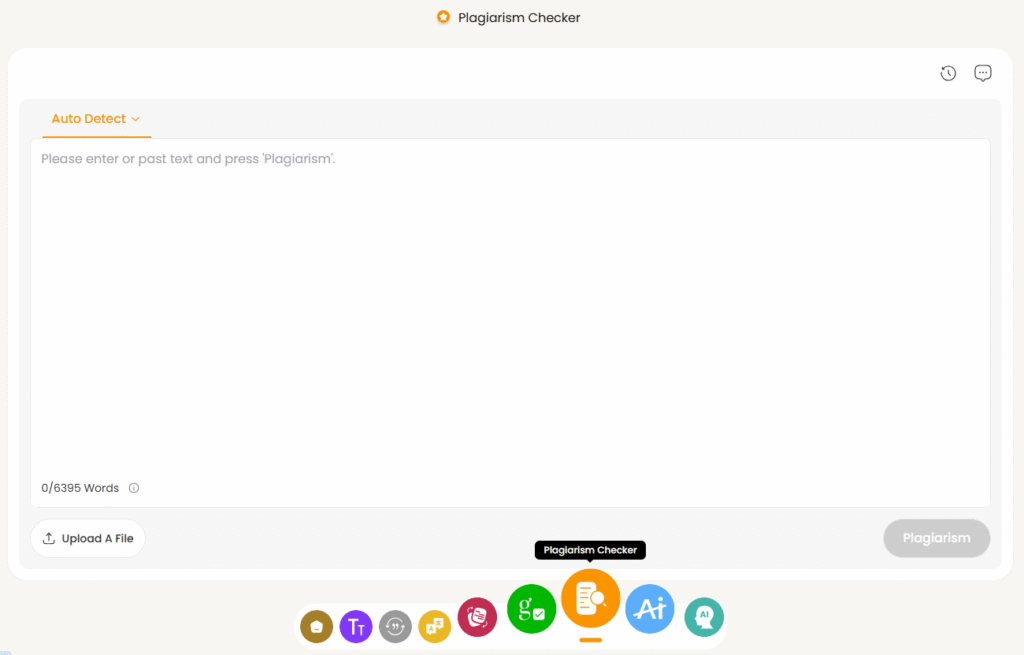
- Check originality – Use KreativeSpace Plagiarism Checker.
- Humanize the text – Adjust sentence flow using AI Humanizer.
- Improve grammar – Run AI output through Grammar Checker.
- Cite sources correctly – Use Citation Generator for proper attribution.
Following this workflow ensures AI assists your writing without triggering plagiarism flags.
When AI Paraphrasing Counts as Cheating
AI paraphrasing is not automatically cheating. Cheating occurs if:
- AI output replaces your personal effort
- Sources are not cited
- Work is submitted as fully original
Responsible use supports productivity and learning while maintaining academic integrity.
Professional vs Academic Use
- Professional writing: AI paraphrasing is widely accepted for reports, content creation, and summaries.
- Academic writing: Stricter rules apply. Originality, understanding, and proper attribution are essential.
High-quality AI paraphrasing, like KreativeSpace Paraphraser, lowers similarity scores and maintains style.
How to Verify AI-Paraphrased Content
Safe practices include:
- Multiple checks: Run text through plagiarism and AI detectors.
- Manual edits: Ensure your unique voice is present.
- Cross-check sources: Verify all references are correctly cited.
- Summarize intelligently: Use KreativeSpace Summarizer for concise and original summaries.
This ensures AI-paraphrased work is safe and credible.
The Decider
So, do plagiarism checkers flag AI-paraphrased text?
- Sometimes they do, especially if the AI preserves too much of the original structure or unique phrases.
- Proper use of KreativeSpace tools—Paraphraser, Plagiarism Checker, Grammar Checker, AI Humanizer, Summarizer, and Citation Generator—keeps your writing original and professional.
Responsible AI paraphrasing is safe and effective. Cheating occurs only when guidelines are ignored.