Why Students Are Worried About AI
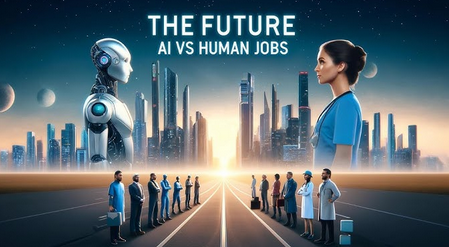
The question will AI destroy jobs is on every student’s mind today. AI automation is no longer a concept of the future—it is actively reshaping industries. Entry-level roles, traditional office tasks, and even some creative jobs are now performed faster and cheaper by AI systems.
Kreativespace tools such as Summarizer and Paraphraser allow students to work with AI responsibly, improving productivity while maintaining academic integrity.
AI is powerful, but it can also be intimidating. Understanding its impact is crucial for career planning and skill development.
How AI Is Changing the Job Market
Automation of Routine Work
AI excels at repetitive tasks. From data entry to scheduling and customer service, AI systems can perform these tasks with high efficiency. For students entering such roles, these positions may disappear or evolve.
AI in Advanced Roles
AI is no longer limited to simple tasks. Algorithms can now write reports, analyze financial data, generate marketing copy, and even produce coding solutions. Outbound studies show that millions of entry-level jobs are at risk in the next decade.
Shifting Skill Requirements
The workforce demands skills AI cannot easily replicate—creativity, judgment, emotional intelligence, and ethical reasoning. Students who focus on these areas will remain competitive.
Which Jobs Are Most Vulnerable
- Administrative Jobs – Scheduling, documentation, and clerical work
- Customer Service – Chatbots and automated support systems
- Data Analysis – AI can process and visualize data faster than humans
- Basic Content Creation – Summarization and paraphrasing tools can replace entry-level writers
Even for vulnerable jobs, students can use AI tools like AI Detector to ensure responsible application while learning AI-enhanced skills.
Jobs Resistant to AI
- Creative professions (writing, design, art)
- Strategic decision-making roles
- Jobs requiring empathy or human interaction
- AI education and training roles
Students should focus on developing unique human-centric skills while leveraging AI to increase efficiency. Kreativespace Grammar Checker helps refine outputs while maintaining originality.
Potential Benefits of AI for Students
- Enhanced Productivity – Tools like Summarizer allow rapid analysis of research papers
- Creative Assistance – Paraphraser helps brainstorm alternative ways to express ideas
- Learning Aid – AI can tutor, explain concepts, and provide feedback
- Skill Development – Familiarity with AI gives students an edge in the modern job market
Preparing for an AI-Driven Workforce
Upskilling and AI Literacy
Students should learn programming basics, data analysis, AI tool usage, and ethical AI practices.
Adaptability and Problem-Solving
AI cannot replicate human judgment in novel situations. Developing problem-solving and decision-making skills ensures long-term career resilience.
Ethical AI Use
Kreativespace encourages students to experiment ethically, using tools without violating plagiarism or originality standards.
Building a Personal Portfolio
Students can showcase unique projects, research, and creative work that highlight human skills, not just AI outputs.
How AI Will Reshape Industries
Healthcare
AI assists in diagnosis, imaging analysis, and administrative tasks. Human oversight remains critical.
Finance
AI manages risk assessment, fraud detection, and trading predictions. Students entering finance need to understand AI analytics.
Education
AI enhances learning with personalized recommendations, tutoring, and automated grading. Students can use tools like Summarizer for efficient learning.
Media and Entertainment
AI can generate content, but creativity and emotional storytelling still rely on human input.
Technology
Software development, cybersecurity, and AI engineering roles are evolving. Understanding AI tools is now essential.
Potential Challenges Students May Face
- Overreliance on AI may reduce creativity and critical thinking
- Rapid technological change could make some skills obsolete
- Ethical dilemmas in AI-assisted assignments
- Increased competition as AI reduces barriers for some tasks
Kreativespace provides AI-assisted learning while maintaining ethical standards to help students navigate these challenges effectively.
How Students Can Protect Their Careers
- Use AI as a Tool, Not a Crutch – Leverage tools like Paraphraser and Grammar Checker responsibly
- Develop Unique Human Skills – Focus on creativity, problem-solving, leadership, and emotional intelligence
- Stay Informed – Track AI trends, new tools, and industry shifts
- Engage in Lifelong Learning – Continuously upskill to stay competitive in a changing job market
The Future Outlook
- Hybrid Work Models – Humans and AI working together for efficiency
- Regulatory Measures – Governments may create policies to limit disruptive AI impact
- AI in Education – Students will be trained to use AI responsibly
- Greater Emphasis on Creativity – Human uniqueness will be valued more as AI handles repetitive tasks
Outbound studies confirm that students who embrace AI as a complement rather than a competitor maintain an advantage.
The Decider
The question will AI destroy jobs? is nuanced. While AI automates many tasks, it also opens opportunities for students who develop human-centric skills and AI literacy.
Kreativespace tools such as Summarizer, Paraphraser, AI Detector, and AI Humanizer allow students to learn responsibly, enhance productivity, and ensure originality.
Understanding AI’s impact early helps students transform potential fear into opportunity. By combining practical skills, ethical AI use, and continuous learning, students can remain competitive and secure in the evolving job market.